
Accurate Documentation Is Critical in Video Court Systems
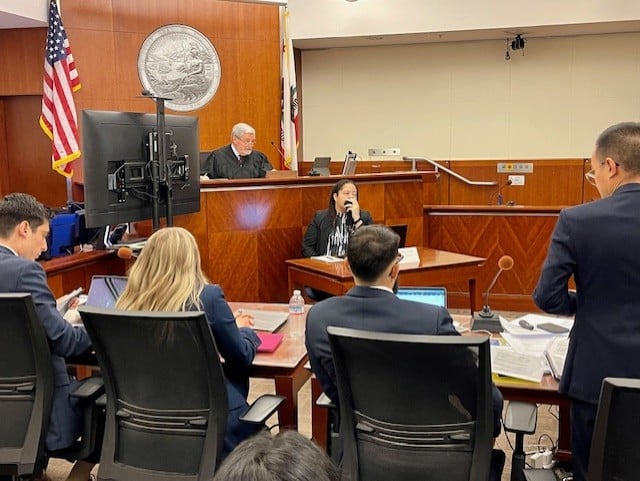
In any courtroom, the official record is more than a formality—it is the foundation of the judicial process. Every ruling, objection, and piece of testimony must be preserved with precision. As courts adopt video-enabled proceedings, the responsibility to capture and maintain that record has expanded, making accurate documentation more important than ever.
A well-designed video court system must do more than facilitate communication in the moment—it must ensure that everything that happens during a proceeding is recorded, preserved, and accessible for the future.
The Record Is the Backbone of Justice
Accurate documentation of proceedings is a fundamental requirement of the judicial process. Appeals, reviews, and legal challenges all depend on a complete and reliable record of what occurred in the courtroom.
If the record is incomplete, unclear, or inconsistent, it can create serious legal risks. Judges, attorneys, and court reporters must be confident that every word spoken and every action taken is captured exactly as it happened.
Reliable Recording of Hearings
Video court systems must support dependable, high-quality recording of proceedings, including synchronized audio and video capture. It is not enough to record audio and video separately—these elements must align perfectly to reflect the true sequence of events.
Synchronization ensures that:
- Testimony is matched accurately with the speaker
- Visual evidence corresponds with what is being discussed
- The timeline of the proceeding is preserved without ambiguity
Without this level of reliability, the value of the recording—and the integrity of the record—can be compromised.
Preserving Testimony Clearly
Testimony is often the most critical component of a case. Whether delivered in person or remotely, it must be captured with clarity and consistency.
Poor audio quality, dropped video, or incomplete recordings can lead to gaps in the record that are difficult—or impossible—to reconstruct. This is especially important in video court environments, where participants may be joining from different locations and devices.
Clear preservation of testimony ensures that the record remains trustworthy and usable long after the proceeding has concluded.
Capturing and Associating Evidence
Beyond recording what is said and seen, courts must also ensure that evidence is properly captured and tied to the case record. This includes digital exhibits, documents, images, and multimedia content presented during the hearing.
A robust video court system ensures that:
- Evidence is recorded at the same time it is presented
- All parties see the same content during the proceeding
- Exhibits are properly labeled and associated with the correct case
Failure to accurately capture and organize evidence can create confusion and complicate future review.
Supporting Workflow, Security, and Chain of Custody
Accurate documentation does not end when the hearing concludes. Court systems must support the full lifecycle of the record, including storage, retrieval, and long-term management.
This requires solutions that align with courtroom workflows and support secure storage, retrieval, and chain-of-custody considerations. Recordings and evidence must be protected from unauthorized access or alteration while remaining easily accessible to authorized users.
Maintaining a clear chain of custody ensures that the record can be trusted as authentic and unchanged—an essential requirement in legal proceedings.
Designing for Confidence and Accountability
When video court systems are designed with documentation in mind, they provide more than just a recording—they provide confidence. Judges can rely on the record to support their decisions. Attorneys can reference proceedings accurately. Appellate courts can review cases with clarity.
Ultimately, accurate documentation reinforces accountability across the entire judicial process.
Final Thoughts
As courts continue to modernize, the importance of the official record remains unchanged. Video technology must enhance—not compromise—the ability to document proceedings with precision.
By prioritizing reliable recording, synchronized audio and video, clear testimony capture, and secure evidence management, courts can ensure that their records remain complete, accurate, and defensible.
In the end, justice depends not only on what happens in the courtroom—but on how well it is preserved.
