
Why Your Company Should Switch to AV Hardware-as-a-Service
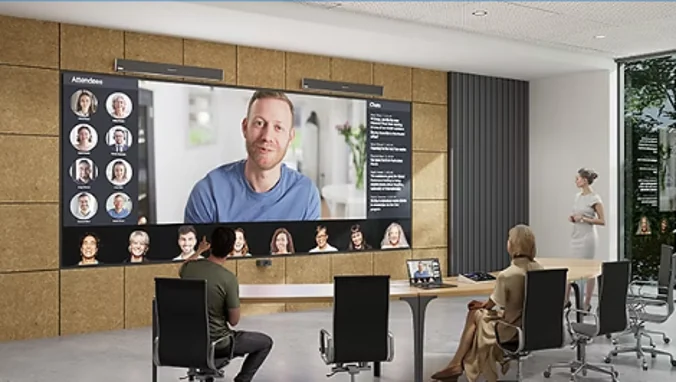
Most companies still treat AV hardware like a one-time purchase, locking budgets into big upfront costs. But the reality is your conference room technology needs fresh updates every few years, or it falls behind fast. Switching to AV Hardware-as-a-Service can turn those hefty expenses into manageable monthly AV service payments, freeing your budget and easing upgrades. Here's why moving from AV CapEx to OpEx with an Evolution Plan AV makes sense for your company's bottom line.
The Hidden Costs of Traditional AV Purchases
Let's be honest about how most companies handle conference room technology. You drop $50,000 or more on new equipment, install everything, and then hope it lasts five years or longer. That upfront investment hits your capital budget hard, requiring executive approval and lengthy procurement processes.
But here's what happens in reality. Within two years, your shiny new system starts showing its age. Software updates stop working smoothly. New collaboration tools don't integrate well. Your remote teams struggle with outdated video quality. Before you know it, you're limping along with technology that frustrates everyone.
The real cost goes beyond the initial purchase. You're paying for maintenance contracts, emergency repairs, and IT staff time troubleshooting problems. When something breaks during a critical client presentation, you're scrambling to fix it or reschedule. These hidden expenses add up fast, often exceeding what you budgeted for.
What is AV Hardware-as-a-Service?
AV Hardware-as-a-Service flips the traditional model on its head. Instead of buying equipment outright, you pay a predictable monthly fee that covers everything: hardware, installation, maintenance, upgrades, and support. Think of it like leasing a car instead of buying one, but better because you get regular updates and support built in.
This model gives you access to the latest conference room technology without the massive upfront investment. Your monthly AV service payment covers the full lifecycle of your equipment. When new technology comes out or your current setup needs refreshing, you're already covered.
The beauty of this approach is its simplicity. You get enterprise-grade AV equipment, professional installation, ongoing maintenance, and regular technology refreshes, all for one predictable monthly cost. No surprise expenses. No emergency repair bills. No obsolete equipment gathering dust.
AV OpEx vs CapEx: Understanding the Financial Shift

Let's talk about the money side of things because that's probably why you're reading this. The difference between AV OpEx vs CapEx isn't just accounting jargon. It fundamentally changes how you budget and plan for technology.
Capital expenditures (CapEx) require large upfront investments. You're buying assets that depreciate over time. This approach ties up cash, requires lengthy approval processes, and limits your flexibility. If technology changes or your needs shift, you're stuck with what you bought.
Operating expenses (OpEx), on the other hand, spread costs over time. Your monthly payments are predictable and easier to budget. You're not tying up capital that could be used elsewhere. And from a tax perspective, OpEx often provides different advantages that your finance team will appreciate.
For most CFOs, moving AV spending from CapEx to OpEx frees up capital for other strategic investments. That $200,000 you would have spent on conference room upgrades? Now it's available for hiring, marketing, or product development. You still get the AV equipment you need, but your cash flow stays healthy.
The Conference Room Technology Refresh Challenge
Your conference rooms are where important things happen. Client presentations. Team collaborations. Executive meetings. Board calls. When the technology fails or frustrates users, it impacts your business directly.
The challenge is that conference room technology evolves quickly. What worked great three years ago feels clunky today. Video resolution standards improve. Collaboration platforms add new features. User expectations change. Your equipment needs to keep pace, or you fall behind.
A conference room technology refresh used to mean another big capital project. You'd assess your needs, get quotes, secure budget approval, and go through the whole procurement cycle again. By the time you finish, some of the technology you just bought is already outdated.
With AV Hardware-as-a-Service, your conference room technology refresh becomes part of your regular service. You're not waiting for equipment to completely fail before upgrading. You're staying current with regular updates and replacements as part of your monthly AV service agreement.
Why Evolution Plan AV Makes Business Sense
Evolution Plan AV represents a smarter way to handle your conference room technology needs. Instead of the buy-and-hope approach, you get a partnership that grows with your business.
Here's how it works in practice. Your AV provider assesses your current setup and future needs. They design a solution that fits your spaces and budget. You agree on a monthly payment that covers everything. Then they install, maintain, and update your systems over time.
The "evolution" part is key. Your needs change. Your team grows. You add new office locations. You adopt new collaboration tools. Evolution Plan AV adapts with you. Your provider monitors your systems, suggests improvements, and implements upgrades as part of your service.
This approach removes the burden from your IT team. They're not troubleshooting AV problems or managing vendor relationships. They can focus on core technology initiatives while your AV partner handles everything related to meeting room technology.
Real Benefits for Your Bottom Line
Let's get specific about what this means financially. Imagine your company has ten conference rooms that need upgrading. A traditional purchase might cost $150,000 to $250,000 upfront, plus annual maintenance contracts of $20,000 to $30,000.
With AV Hardware-as-a-Service, you might pay $8,000 to $12,000 monthly instead. That's roughly $100,000 to $144,000 annually. At first glance, it might seem comparable. But look deeper.
Your monthly AV service includes everything. No surprise repair bills. No obsolete equipment. Regular upgrades keep you current. Your technology never falls more than a year or two behind the latest standards. Over a five-year period, you're actually saving money while getting better, more current technology.
Plus, you avoid the depreciation hit. That $200,000 AV purchase loses value immediately. In three years, it's worth maybe 40% of what you paid. With a service model, you're not holding depreciating assets. You're paying for current capability.
Predictable Budgeting and Planning
CFOs love predictability. When you know exactly what you're spending each month, you can plan better. AV Hardware-as-a-Service gives you that predictability.
Your monthly payment doesn't change unexpectedly. You're not scrambling to find budget for emergency repairs. You're not going back to the board to request capital for upgrades. Everything is planned, budgeted, and predictable.
This predictability extends to your IT team's time too. They're not constantly firefighting AV problems. They know when upgrades are scheduled. They can plan around maintenance windows. The whole process becomes smoother and less stressful.
For multi-year planning, this model makes life easier. You can forecast your AV costs accurately. You can plan office expansions knowing what the AV investment will be. You can budget for new locations with confidence.
Staying Current Without the Pain
Technology moves fast. The collaboration tools your team uses today might be different next year. Remote work capabilities that seemed cutting-edge in 2020 are now baseline expectations. Your AV equipment needs to keep up.
Traditional ownership makes staying current painful and expensive. You either live with outdated technology or you go through another capital project. Both options are frustrating.
With a monthly AV service model, staying current is built into your agreement. Your provider monitors technology trends. They recommend upgrades when they make sense. They handle the implementation. You get the benefits without the project management headaches.
This is especially important as hybrid work continues evolving. Your conference rooms need to support in-person and remote participants equally well. The technology that enables this keeps improving. An Evolution Plan AV keeps you at the forefront without constant reinvestment.
Risk Mitigation and Support
Equipment fails. It's not if, but when. With traditional ownership, you're on the hook for repairs and replacements. Even with maintenance contracts, you often face deductibles, service delays, and finger-pointing between vendors.
AV Hardware-as-a-Service shifts this risk to your provider. When something breaks, they fix or replace it as part of your service. No arguing about warranty coverage. No emergency purchase orders. No downtime while you wait for budget approval.
The support component is equally valuable. Your team gets expert help when they need it. Whether it's troubleshooting a problem, training new employees, or optimizing room setups, your AV partner is there. This level of support would cost significantly more if you purchased it separately.
Making the Switch: What to Expect
If you're considering the switch to AV Hardware-as-a-Service, here's what the process typically looks like.
First, your provider assesses your current situation. They look at your existing equipment, your spaces, and how your team actually uses technology. They talk with your IT team and key stakeholders to understand pain points and requirements.
Next, they design a solution tailored to your needs. Not every conference room needs the same setup. Your large boardroom has different requirements than your small huddle spaces. A good Evolution Plan AV accounts for these differences.
Then comes the financial proposal. You'll see a monthly payment structure that covers everything: equipment, installation, maintenance, support, and future upgrades. This is where you can compare the numbers against your current spending and future capital plans.
Once you agree, implementation begins. Your provider handles the installation, typically working around your schedule to minimize disruption. They train your team on the new systems. They document everything and establish support processes.
After installation, the real value begins. Your provider monitors your systems, handles any issues that arise, and keeps you informed about upgrade opportunities. You get regular check-ins to ensure everything is meeting your needs.
Questions to Ask Potential Providers
Not all AV Hardware-as-a-Service offerings are created equal. Here are the key questions to ask when evaluating providers:
What exactly is included in the monthly payment? Make sure you understand what's covered and what isn't. Look for comprehensive packages that include hardware, software, installation, maintenance, support, and upgrades.
How often does equipment get refreshed? Technology ages quickly. Your agreement should specify how often major components get updated. Look for providers who commit to keeping you current.
What happens if equipment fails? You need clear service level agreements. How quickly will they respond? What's the process for repairs or replacements? Who do you call when something goes wrong?
Can the service scale with your business? If you add locations or expand your team, can your provider grow with you? Flexibility is important for long-term success.
What's the process for upgrades and improvements? Technology changes. Your needs evolve. How does your provider handle these changes? Look for proactive partners who suggest improvements, not just reactive vendors.
The Hybrid Work Factor
Hybrid work is here to stay. Your conference rooms need to support distributed teams effectively. This means high-quality video, clear audio, easy-to-use interfaces, and reliable connectivity.
The challenge is that hybrid work technology is still evolving rapidly. What works well today might feel inadequate in 18 months. Companies that purchased AV equipment in 2019 found much of it inadequate for the hybrid reality of 2020 and beyond.
AV Hardware-as-a-Service protects you from this rapid evolution. As hybrid collaboration tools improve, your conference room technology can improve with them. You're not locked into yesterday's solutions.
Your remote team members deserve the same meeting experience as in-office participants. This requires thoughtful AV design and current technology. A monthly AV service model ensures your rooms stay optimized for hybrid collaboration.
Environmental and Space Considerations
There's another benefit worth mentioning: sustainability. When you own equipment, you're responsible for disposal when it becomes obsolete. Old electronics often end up in landfills, creating environmental problems.
With AV Hardware-as-a-Service, your provider handles equipment lifecycle management. They can refurbish, repurpose, or properly recycle equipment when it's replaced. This is better for the environment and removes a hassle from your facilities team.
Space is another consideration. Obsolete equipment takes up valuable storage space. Spare parts, old displays, outdated control systems... they all need to go somewhere. With a service model, your provider manages this inventory, freeing up your space for more productive uses.
Getting Started: Your Next Steps
If this approach makes sense for your organization, here's how to move forward.
Start by documenting your current AV spending. Include the original equipment costs, maintenance contracts, repair expenses, and IT staff time spent on AV issues. This gives you a baseline for comparison.
Next, assess your actual needs. Walk through your conference rooms. Talk to users. Identify pain points and wish-list items. Understanding what you really need helps you evaluate proposals effectively.
Then reach out to AV Hardware-as-a-Service providers. Get proposals from multiple vendors. Compare not just the monthly costs but the scope of service, equipment quality, support levels, and upgrade commitments.
Involve your finance team early. They'll want to understand the AV OpEx vs CapEx implications for your specific situation. They may have questions about contract terms, payment structures, and accounting treatment.
Finally, start with a pilot if possible. Choose one or two conference rooms to convert first. This lets you test the service model, evaluate the provider, and build confidence before committing to a full rollout.
The Future is Flexible
The business world is changing faster than ever. Your technology needs to keep pace without breaking your budget or overwhelming your team. AV Hardware-as-a-Service offers a path forward that's flexible, predictable, and sustainable.
By shifting from large capital purchases to a monthly AV service model, you free up budget, reduce risk, and ensure your conference room technology stays current. You get enterprise-grade equipment and support without the enterprise-sized headaches.
The question isn't whether to make this shift, but when. Companies that move to an Evolution Plan AV approach are positioning themselves for success in an increasingly hybrid, technology-dependent business environment.
Your conference rooms should be assets that enable your team, not liabilities that drain your budget. With the right service partner and approach, they can be exactly that. The smart switch to AV Hardware-as-a-Service might be the most impactful technology decision you make this year.
Take a close look at your current AV situation. Add up the real costs. Consider the frustrations and limitations. Then imagine a world where your conference room technology just works, stays current, and costs less than you're spending now. That world is available today through AV Hardware-as-a-Service. The only question is whether you're ready to make the smart switch.
Frequently Asked Questions
What exactly does AV Hardware-as-a-Service include?
AV Hardware-as-a-Service typically includes all the equipment needed for your conference rooms (displays, cameras, microphones, speakers, control systems), professional installation, ongoing maintenance and support, regular technology upgrades, and replacement of failed components. Everything is covered under one predictable monthly payment, eliminating surprise costs and keeping your technology current.
How does monthly AV service compare financially to buying equipment outright?
While traditional purchases require large upfront capital investments of $150,000 to $250,000 or more, plus ongoing maintenance costs, monthly AV service spreads these expenses over time with predictable payments. Over a five-year period, you often save money because you avoid depreciation losses, emergency repair costs, and premature obsolescence while getting regular upgrades included in your service.
How often is conference room technology refreshed under a service agreement?
Most AV Hardware-as-a-Service agreements include technology refreshes every three to five years, depending on the equipment and your specific contract terms. Your provider monitors your systems and recommends upgrades as new technology becomes available, ensuring you never fall too far behind current standards without having to launch a new capital project.
Can AV Hardware-as-a-Service scale as my company grows?
Yes, a good Evolution Plan AV is designed to scale with your business. As you add locations, expand teams, or change your space configuration, your service provider can adjust your agreement to accommodate these changes. This flexibility is one of the key advantages over traditional ownership, where scaling requires new capital investments and procurement cycles.
What happens if equipment fails during my service agreement?
Equipment failures are covered as part of your monthly AV service. Your provider is responsible for repairs or replacements at no additional cost to you. Most agreements include service level commitments that specify response times and resolution processes, ensuring minimal downtime when issues occur. This shifts the risk and cost of equipment failure from you to your service provider.