
Fixing the Glass Box: How to Solve Audio Echo in Modern Corporate Boardrooms
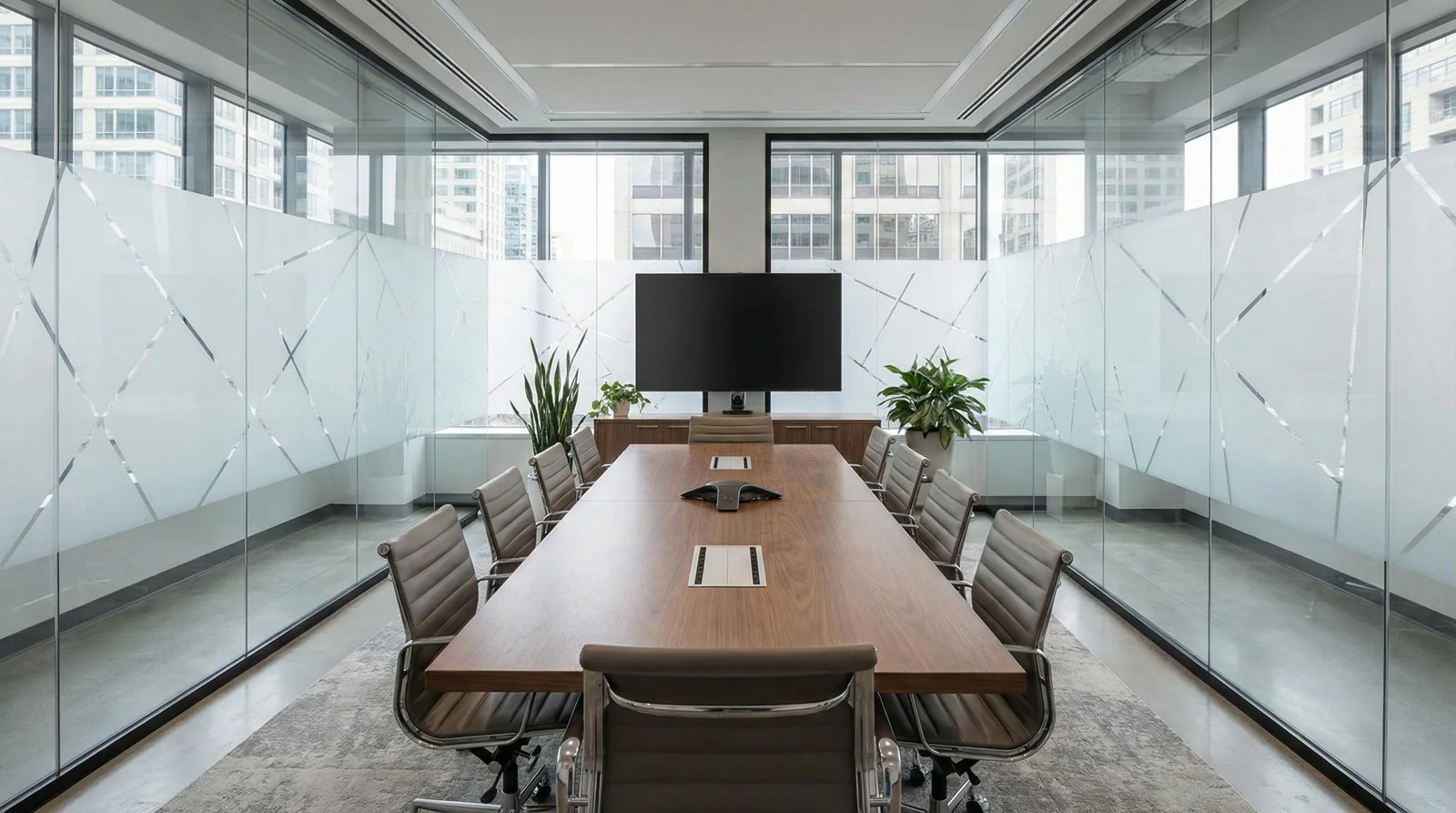
Glass boardrooms look stunning but can turn meetings into echo chambers. You've spent time and money on sleek design only to hear complaints about poor audio during calls. Fixing meeting room echo isn't just about adding microphones; it requires smart conference room acoustic treatment to get clear sound. Let's explore practical steps to improve glass boardroom audio without sacrificing style.
Why Glass Boardrooms Create Audio Nightmares
You've probably been in one of these meetings. Someone joins remotely, and suddenly every word bounces around the room like a pinball. People start talking over each other because the echo makes it impossible to tell when someone's finished speaking. Remote participants keep asking "Can you repeat that?"
The problem is simple: glass reflects sound. Hard surfaces like glass walls, polished tables, and tile floors bounce sound waves around instead of absorbing them. When you combine multiple reflective surfaces in one room, you create what acousticians call a "live" space. That's a polite way of saying your boardroom sounds like a bathroom.
Modern corporate AV design looks great in architectural magazines, but it often ignores basic physics. The same minimalist aesthetic that wins design awards can make your meeting spaces practically unusable for video calls. And with hybrid work becoming the norm, bad audio isn't just annoying anymore. It's a business problem.
Understanding the Echo Problem in Your Space
Before you start buying solutions, you need to understand what's happening in your specific room. Not all echo problems are created equal.
The Reflection Pattern
Sound travels in waves. When those waves hit a hard surface, they bounce back. In a glass boardroom, sound might bounce off the windows, hit the conference table, reflect off the ceiling, and then bounce around some more. Each reflection adds a slight delay, creating that hollow, echoing effect that makes speech hard to understand.
Walk into your problem boardroom and clap your hands once. Do you hear a quick flutter? A long reverb tail? That tells you how much sound is bouncing around. The longer the echo, the more treatment you'll need.
The Frequency Factor
Different frequencies behave differently. Low frequencies (like the rumble of HVAC systems) are harder to control and need thicker absorption materials. High frequencies (like the consonants in speech) bounce around more easily and create that tinny, harsh sound quality.
For fixing meeting room echo, you want to focus on the mid and high frequencies where speech lives. That's where clarity happens.
Strategic Conference Room Acoustic Treatment Options
Let's get practical. Here are the solutions that actually work, ranked from easiest to most involved.
Acoustic Panels: Your First Line of Defense
Fabric-wrapped acoustic panels are the workhorses of conference room acoustic treatment. They absorb sound instead of reflecting it, and they come in styles that won't make your designer cry.
Mount them on walls between glass sections. Even covering 20-30% of your wall space can make a massive difference. Place panels on the wall opposite your main video display and on side walls where sound bounces most.
You can get panels in custom colors, with printed graphics, or even with your company logo. They'll look intentional, not like an afterthought.
Pro tip: Place panels at seated ear height (roughly 3-4 feet off the floor). That's where most speech energy lives during meetings.
Ceiling Solutions That Disappear
Your ceiling is prime real estate for acoustic treatment. Ceiling clouds and baffles hang from the ceiling and absorb sound from above. They're especially good in rooms with high ceilings where wall panels can't reach.
For glass boardroom audio, ceiling treatment handles the vertical reflections that wall panels miss. Sound bouncing between the table and ceiling is a major culprit in echo problems.
Recessed ceiling microphones work beautifully in treated spaces. When you combine proper acoustic treatment with quality mics placed strategically overhead, you get clean audio pickup without visible equipment cluttering your table. This is a key part of modern corporate AV design that balances aesthetics with function.
Furniture and Soft Goods
Yes, your furniture choices affect your audio. A large upholstered sofa absorbs more sound than a leather one. Fabric chairs beat hard plastic. Even adding curtains or drapes that can be closed during important calls helps.
Area rugs under the conference table reduce floor reflections. This is especially helpful if you have tile or polished concrete floors.
Don't underestimate the power of a bookshelf filled with books. The irregular surfaces and paper absorb and diffuse sound naturally.
Specialized Glass Treatments
If you absolutely can't add panels or other visible treatments, there are options for the glass itself. Acoustic laminated glass includes a sound-dampening layer that reduces both echo and outside noise. It's expensive and requires replacing your existing glass, but it maintains that clean look while improving acoustics.
Window film treatments can help slightly, though they're not as effective as dedicated acoustic materials. Think of them as a 10% solution, not a complete fix.
Building a Complete Enterprise Audio Solutions System
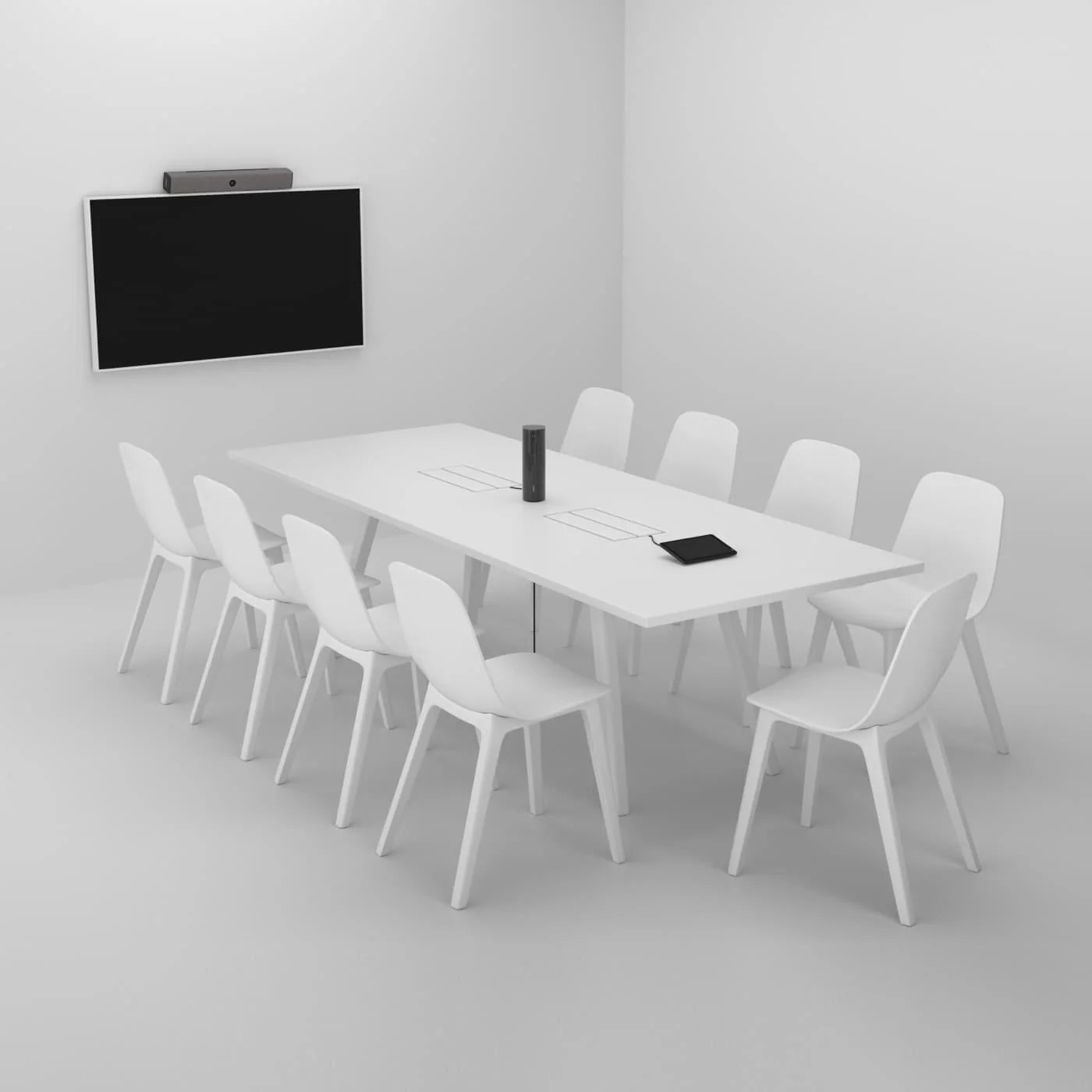
Acoustic treatment is only half the battle. You need the right technology to capture and transmit that improved sound.
Microphone Placement Strategy
Even the best microphones can't fix a bad acoustic space, but good mics in a treated room work magic. For boardrooms, you want multiple microphone pickup points to ensure everyone is heard clearly, no matter where they sit.
Recessed ceiling microphones are popular for good reason. They provide excellent coverage without taking up table space or getting in the way of documents and laptops. Mount them above seating areas, not in the center of the table where they'll mostly pick up the sound of people shuffling papers.
Tabletop microphone arrays offer another option. Modern versions use beamforming technology to focus on active speakers while reducing background noise and reflections.
The key is coverage. Every seat should be within the optimal pickup range of at least one microphone.
Speaker Configuration
Your speakers matter just as much as your mics. Built-in ceiling speakers work well for most boardrooms, but placement is critical. You want even coverage without hot spots where sound is too loud or dead zones where it's too quiet.
For fixing meeting room echo in video calls, consider this: speakers and microphones need to be positioned to avoid feedback loops. Your AV installer should measure the room and set proper gain levels to prevent that awful squealing sound.
DSP and Echo Cancellation
Digital Signal Processors (DSP) are the brains of your audio system. They handle echo cancellation, noise reduction, and automatic gain control. A good DSP can make a mediocre room sound decent, but it can't perform miracles in a terrible acoustic space.
That's why you need both proper conference room acoustic treatment AND quality electronics. They work together. The acoustic treatment handles the physical echo in the room, while the DSP cleans up the electronic echo that happens when your microphones pick up sound from your speakers.
Room Design Principles That Prevent Echo
If you're still in the design phase, you can build acoustic performance into your space from the start. This is where corporate AV design thinking pays off.
The 50% Rule
Try to make at least 50% of your surfaces non-reflective. If you have glass walls on two sides, balance them with acoustic ceiling treatment and sound-absorbing panels on other walls. Mix materials: glass, wood, fabric, and acoustic panels create a more balanced sound environment than all-glass everything.
Shape Matters
Parallel glass walls are echo factories. If you're designing from scratch, consider angling walls slightly or using curved glass sections to scatter sound instead of bouncing it back and forth in a straight line.
Avoid perfectly square rooms if possible. Rectangular spaces with different length walls reduce standing waves (those weird resonances at specific frequencies).
Zoning Your Space
Create acoustic zones within larger boardrooms. Use partial-height dividers with acoustic properties to break up large spaces. This helps contain sound and reduces the overall echo problem.
Testing and Fine-Tuning Your Solution
You've added acoustic treatment and upgraded your audio gear. Now what? Test everything with real meetings before declaring victory.
The Real-World Test
Schedule a video call with remote participants and ask for honest feedback. Have people sit in different seats. Try different speaker configurations. Record meetings and listen back to hear what remote participants actually hear.
Pay attention to:
-
Can remote participants understand every word?
-
Do voices sound natural or hollow?
-
Can you hear paper rustling, keyboard typing, or HVAC noise?
-
Does the system pick up people equally well from all seats?
Measurement Tools
Professional acousticians use specialized equipment to measure reverberation time (RT60) and other metrics. For most boardrooms, you're targeting an RT60 between 0.4 and 0.6 seconds. That's the sweet spot where speech is clear but the room doesn't sound dead.
You can hire an acoustic consultant to measure your space and recommend specific treatments. The investment usually pays off in getting the solution right the first time.
Iterative Improvements
Start with the basics and add treatment gradually. It's easier to add more acoustic panels than to remove them. Begin with 20% coverage, test, then add more if needed.
Common Mistakes to Avoid
Let's talk about what doesn't work, so you can skip the expensive learning curve.
Mistake 1: Treating Only One Surface
Adding acoustic panels to just one wall rarely solves the problem. Sound bounces in three dimensions, so your treatment needs to address multiple surfaces. Walls, ceiling, and floor all contribute to the acoustic environment.
Mistake 2: Choosing Looks Over Performance
Those thin, decorative foam tiles you found online? They probably won't help much. Effective acoustic treatment needs proper thickness and density. A 1-inch thick panel absorbs way more sound than a 1/4-inch one.
Get samples before ordering. Reputable acoustic panel manufacturers provide NRC (Noise Reduction Coefficient) ratings that tell you exactly how much sound the material absorbs.
Mistake 3: Ignoring the HVAC System
Your heating and cooling system can be a major noise source. Even after fixing meeting room echo, you'll still have audio problems if your HVAC is roaring in the background. Work with your facilities team to balance air flow with noise levels. Sometimes simple fixes like adjustable vents or duct lining make a big difference.
Mistake 4: Skimping on Professional Installation
DIY acoustic treatment can work for simple spaces, but complex glass boardrooms usually need professional help. An experienced AV integrator understands both the acoustic and electronic sides of the equation. They'll save you money in the long run by getting it right the first time.
Budget Planning for Glass Boardroom Audio Fixes
Let's talk numbers. What should you expect to spend on fixing your glass boardroom audio?
Entry-Level Solutions ($2,000 to $5,000)
For a typical 12-person boardroom:
-
6-8 acoustic panels strategically placed
-
Basic ceiling treatment
-
USB conferencing speakerphone
-
Professional consultation and installation
This gets you noticeable improvement without breaking the bank. It's a good starting point if you're not sure how much treatment you need.
Mid-Range Solutions ($5,000 to $15,000)
This range includes:
-
Comprehensive wall and ceiling acoustic treatment
-
Recessed ceiling microphones with proper coverage
-
Quality ceiling speakers
-
Basic DSP for echo cancellation
-
Professional calibration
Most corporate boardrooms fall into this category. You get professional-grade results that work reliably for daily use.
Premium Enterprise Audio Solutions ($15,000+)
For flagship boardrooms or spaces with complex requirements:
-
Complete acoustic design and treatment
-
Advanced microphone arrays with beamforming
-
High-end DSP with automatic mixing
-
Integrated video and audio systems
-
Ongoing support and maintenance
This level makes sense for executive boardrooms, client-facing spaces, or rooms that get heavy daily use.
Working with Your Design Team
You don't have to choose between beautiful design and functional audio. The best solutions respect both priorities.
Starting the Conversation
Bring your architect, interior designer, and AV consultant together early. Show them examples of boardrooms that look great AND sound great. They exist! Modern conference room acoustic treatment comes in styles that complement any aesthetic.
Frame the conversation around user experience, not just specifications. "Our clients need to hear us clearly on video calls" resonates better than "We need an RT60 of 0.5 seconds."
Finding Compromise
Maybe you can't cover an entire glass wall with acoustic panels. That's okay. Focus treatment where it matters most and find creative solutions for the rest. Acoustic art panels, living plant walls, and designer ceiling treatments all absorb sound while adding visual interest.
Your designer might actually appreciate the challenge. Acoustic elements add texture and depth to spaces that might otherwise feel cold and sterile.
Maintaining Your Acoustic Investment
Once you've fixed your glass boardroom audio, keep it working well.
Regular Cleaning
Fabric acoustic panels collect dust. Vacuum them gently every few months. Most panels have removable covers you can clean or replace.
System Checks
Test your audio system monthly. Make a quick test call, check all microphone positions, and verify speakers work properly. Catch small problems before they become big ones.
User Training
The best system in the world doesn't help if people don't know how to use it. Train your team on proper microphone technique, how to start calls correctly, and who to contact if something isn't working.
Create simple instruction cards for each room. Remote controls and touch panels should be clearly labeled.
Making the Case to Leadership
You know you need to fix the echo problem. Now you need to convince the people who approve budgets.
Build Your Business Case
Calculate the cost of bad audio:
-
How many hours per week do people waste on "Can you hear me?" issues?
-
What's the impact on client impressions during sales calls?
-
Are you losing productivity because people avoid using certain meeting rooms?
Even modest estimates usually show that fixing meeting room echo pays for itself quickly.
Show, Don't Tell
Record a video call in your problem boardroom. Then record one in a space with good audio. The difference will be obvious. Decision-makers respond to demonstrations better than technical explanations.
Propose a Pilot
If budget is tight, propose fixing one boardroom as a test. Track usage and satisfaction before and after. Use that data to justify treating additional spaces.
The Future-Proof Approach
Technology changes fast, but acoustic principles don't. Money spent on proper conference room acoustic treatment will serve you well for decades. Microphones and processors will need updates, but those acoustic panels will keep working.
Design your solution with flexibility in mind. Use modular treatments you can adjust as needs change. Choose audio systems that can integrate with future technology platforms.
As hybrid work continues to grow, glass boardroom audio quality becomes more important, not less. The spaces that work well will get used more. The ones with echo problems will sit empty while people crowd into the few rooms with decent audio.
Taking Action on Your Echo Problem
You've got the knowledge. Now it's time to move forward.
Start by assessing your current situation. Walk through your glass boardrooms with fresh ears. Identify the worst offenders. Prioritize rooms based on usage and importance.
Get professional help. A qualified acoustic consultant or AV integrator can evaluate your space and propose specific solutions. Many offer free initial consultations.
Request proposals from multiple vendors. Compare not just price, but approach and experience with similar spaces. Ask for references and visit completed projects if possible.
Remember, fixing meeting room echo in glass boardrooms isn't a luxury. It's a practical necessity for modern business communication. Clear audio enables better collaboration, stronger client relationships, and more productive meetings.
Your beautiful glass boardroom can look amazing AND sound amazing. You just need the right combination of acoustic treatment and audio technology. The solutions exist. The expertise is available. The only question is when you'll stop tolerating bad audio and start doing something about it.
Ready to transform your echo chamber into a communication powerhouse? Start by reaching out to acoustic professionals who understand both the technical and design challenges of glass boardroom audio. Your remote participants will thank you, your team will be more productive, and those gorgeous glass walls will finally work as well as they look.
Frequently Asked Questions
What causes echo in glass conference rooms?
Echo in glass boardrooms happens because hard surfaces like glass walls, polished tables, and tile floors reflect sound waves instead of absorbing them. When sound bounces repeatedly between parallel glass surfaces, it creates that hollow, reverberating effect that makes speech hard to understand. The more reflective surfaces in your space, the worse the echo becomes.
How much does it cost to fix meeting room echo?
Basic acoustic treatment for a typical boardroom starts around $2,000 to $5,000, including panels and installation. Mid-range solutions with professional microphones and speakers run $5,000 to $15,000. Premium enterprise audio solutions for flagship spaces can exceed $15,000. The investment usually pays for itself quickly through improved meeting productivity and better client impressions.
Can you fix boardroom echo without changing the design?
Yes, you can improve glass boardroom audio while maintaining your aesthetic. Modern acoustic panels come in custom colors and designs that complement your space. Recessed ceiling microphones and hidden speakers preserve clean sightlines. Ceiling clouds and strategic furniture placement add acoustic treatment without covering your glass walls. Work with designers who understand both acoustics and aesthetics.
Where should acoustic panels be placed in a glass boardroom?
Place acoustic panels on walls between glass sections, focusing on areas at seated ear height (3 to 4 feet off the floor). Cover at least 20 to 30% of wall space for noticeable improvement. Add ceiling treatment to handle vertical reflections between the table and ceiling. Position panels on the wall opposite your video display and on side walls where sound bounces most. The goal is to interrupt reflection patterns without covering every surface.
Do recessed ceiling microphones work in echo-prone rooms?
Recessed ceiling microphones perform best when combined with proper acoustic treatment. In untreated glass boardrooms, they'll pick up lots of echo and reflection along with voices. But in a treated space, ceiling mics provide excellent coverage without cluttering your table. They're a key component of modern corporate AV design that balances clean aesthetics with functional audio quality. Always address room acoustics before investing in premium microphones.